
Japan - Land of the Rising Sun
Overview
11 days by plane from Zagreb (via Istanbul)
Group departures: 17.3. - 27.3.2026., 28.3. - 7.4., 1.6. - 11.6., 16.9. - 26.9.2027.
Airline taxes included in the price! First Minute discount 100 € for bookings up to 60 days before departure or until capacity is filled at the First Minute price.
1. ZAGREB – ISTANBUL – TOKYO
Meeting of passengers at Zagreb Airport two hours before the aircraft departure. Departure for Istanbul at 9:25 on flight TK1054 (Turkish Airlines). Arrival in Istanbul at 13:45 local time. Continuing flight to Tokyo at 15:25 on flight TK50 (Turkish Airlines). Overnight flight with meals served during the flight.
2. TOKYO
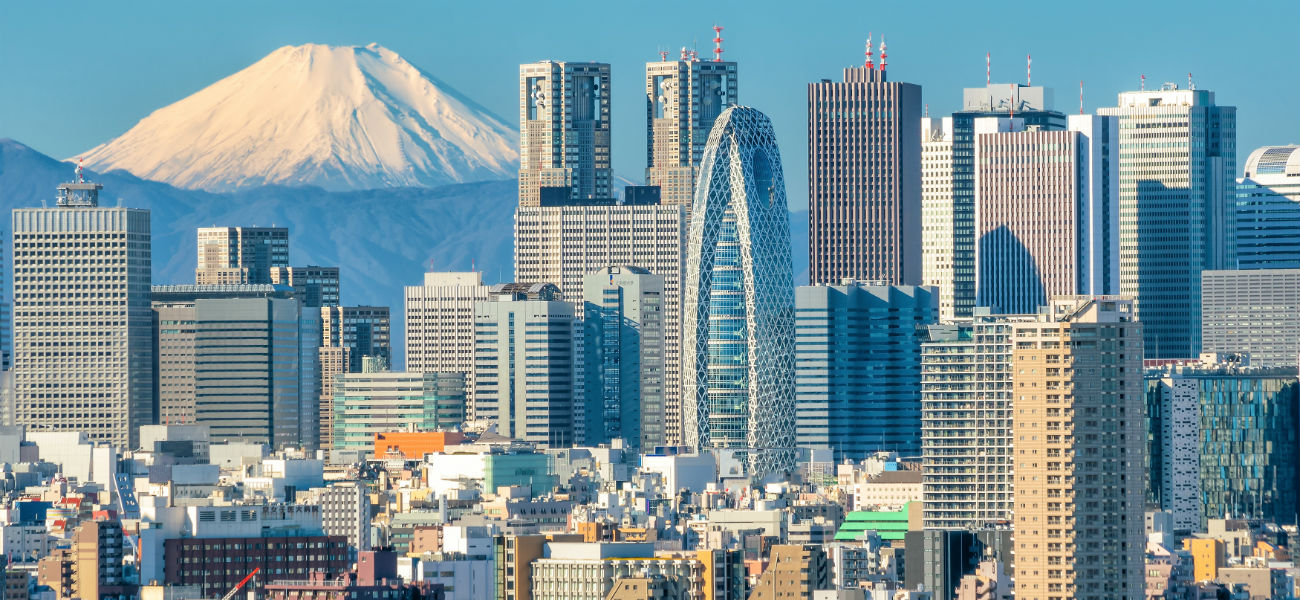
Arrival in Tokyo is scheduled for 8:45 local time. After landing and completing border and customs formalities, you will be welcomed by a representative of the local agent and an organized transfer to the hotel. Tokyo is a lively city known for its modern architecture, cultural landmarks, gastronomy, history, music and busy streets. Perhaps one of the most famous landmarks is the Tokyo Skytree. It is the tallest structure in Japan, and at 634 meters the second tallest structure in the world. It offers an incredible view of Tokyo, and it is especially nice to visit in spring when cherry blossoms can be seen at the base of the tower. Tokyo is also home to numerous museums and art galleries, such as the Tokyo National Museum and the Mori Art Museum, as well as distinctive temples. Check-in and accommodation at the hotel. Rest at the hotel and free time for dinner and the first orientation walk through the streets of Tokyo accompanied by the tour leader. Overnight.
3. TOKYO
Breakfast at the hotel. Today we will get to know one of the world's largest metropolises and the capital of Japan. Tokyo was already the first city in the world to exceed 10 million inhabitants in 1962, and today, together with Yokohama, Kawasaki, Chiba and Saitama, with over 35 million inhabitants, it is the largest metropolis in the world. Tokyo is also the seat of the Japanese throne. We will visit the Imperial Palace from the outside as it is closed to the public and opens only twice a year, for the emperor's birthday and New Year. We then visit the traditional wholesale market Tsukiji Outer Fish Market, and continue with a visit to Meiji Jingu Shrine, a Shinto shrine built as the resting place for the souls of Emperor Meiji and Empress Shoken. We will also go to the Asakusa district where we will visit the city's oldest temple dedicated to the goddess Kannon. According to legend, in the 7th century two local fishermen pulled a statue of the Buddhist goddess of mercy, Kannon, into their net. No matter how many times they returned it to the water, they would find it again in their net. They built a temple so the statue would have a home. The temple was expanded several times, and it is believed that the original Kannon statue is buried beneath the gold-adorned sanctuary located behind the main altar in the main hall of the temple. We will then go to the luxurious shopping district Ginza with numerous restaurants, galleries, upscale boutiques, jewelry shops and department stores. In the famous building with a distinctive facade, Ginza Place, there is a store specialized in high-tech electronics, known as "the largest electronics store in the world." Return to the hotel in the late afternoon. Free time. Overnight.
4. TOKYO – full day excursion to NIKKO – TOKYO
After breakfast we depart by bus for a full-day excursion to Nikko National Park which perfectly combines spirituality with nature. The Shrines and Temples of Nikko are a complex of 103 buildings in the picturesque landscape of the city of Nikko in Tochigi Prefecture. Parts of the complex are protected cultural properties, and after having been abandoned for a time, they were restored at the beginning of the 17th century, and Nikko was chosen as the site for Tôshôgu, a shrine complex built as a mausoleum for Tokugawa Ieyasu, the founder of the Tokugawa shogunate which ruled Japan for more than 250 years. Since that period, Nikko has played a very important role as a symbol of national sovereignty. The shrine complex contains numerous rooms with artworks and wood carvings, of which the most famous are the "three wise monkeys" (one hears no evil, one speaks no evil, one sees no evil). The Shrines and Temples of Nikko, together with their natural surroundings, have been sacred sites for centuries, known for their architectural and decorative masterpieces, and were inscribed on the UNESCO World Heritage List in Asia in 1999. Lunch in a local restaurant (not included), and return to the hotel in Tokyo in the afternoon. Free evening for personal programs and activities. Overnight.
5. TOKYO – MOUNT FUJI – HAKONE
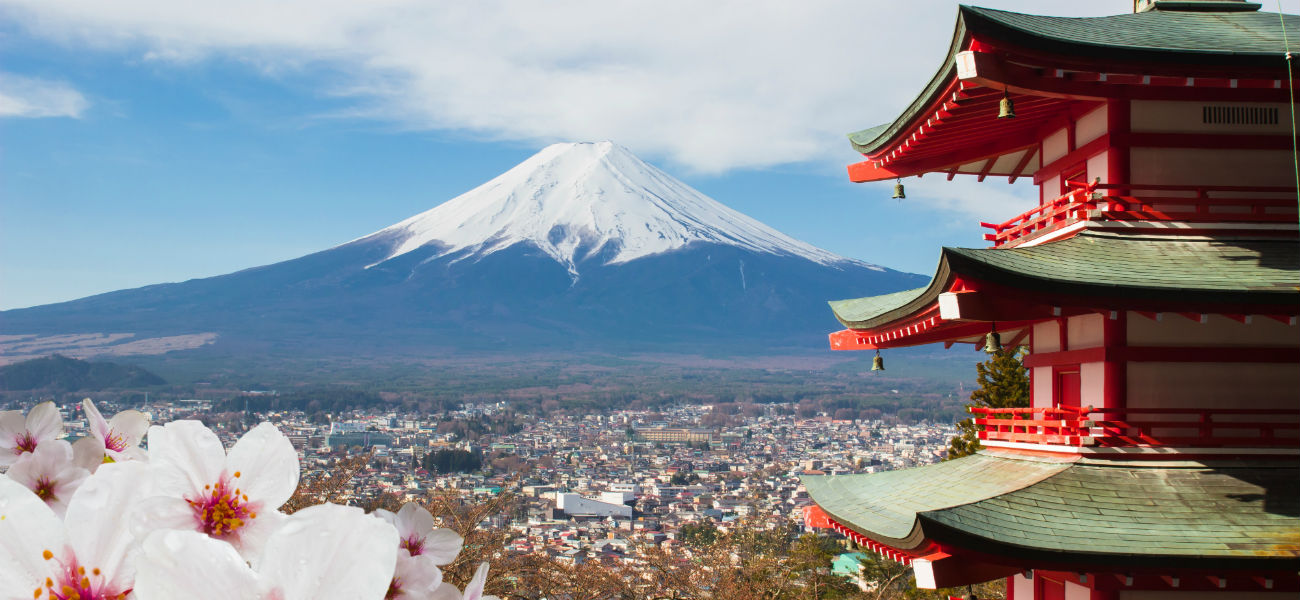
Breakfast. Check-out from the hotel and departure by bus towards the sacred Japanese Mount Fuji (approx. 2 – 2.5 hours drive). The local agent will take your luggage and arrange its delivery to our hotel in Kyoto. For this reason, you will need to set aside in a small bag the items you will use for the overnight stay in Atami. Drive toward the mountain to the 5th station located at 2300 meters. At the 5th station, besides the shrine, meteorological station and post office, there is also a rest area. Free time to enjoy the mountain air with panoramic views of Tokyo. Mount Fuji rises from the surrounding plains along the coast of Japan's largest island Honshu on the Pacific Ocean. This massive cone is 3,376 meters high, and its base diameter is about 125 kilometers. The mountain is surrounded by five lakes located in an area rich in forests, streams and waterfalls. Fuji is a volcano, and the photogenic and recognizable summit of Mount Fuji is the rim of a crater often hidden by clouds. The last recorded eruption was in 1707 when black ash fell on the streets of Tokyo, nearly one hundred kilometers away. The Japanese often call this mountain Fuji-san, as they address respected persons, thereby showing it respect. Indeed, the indigenous Ainu, Shintoists and Buddhists consider Fuji a sacred mountain. Mount Fuji represents a symbol of Japan as much as the rising sun. After a lunch break we continue to Hakone, a small town by Lake Ashi located within Fuji-Hakone-Izu National Park. Hakone is known for its hot springs and is a popular weekend destination for residents of the capital. Upon arrival we take a cruise on Lake Ashi which formed about 3,000 years ago due to a volcanic eruption, and then we will take the Hakone Ropeway cable car which connects Sounzan station and Togendai station on the shore of Lake Ashi. The Hakone ropeway offers visitors spectacular views of the surrounding mountains, the Owakudani valley and Lake Ashi. Also, the ride allows visitors to see active volcanic emissions from the Owakudani valley, known for its hot springs and sulfur fumes. We then proceed to the hotel in the Atami area. Check-in and accommodation and dinner at the hotel. Overnight.
6. HAKONE – KYOTO
Breakfast at the ryokan followed by check-out and transfer to Odawara railway station where we will board the Shinkansen - the Japanese bullet train which will take us to Kyoto at speeds up to 300 km/h. Upon arrival in Kyoto we begin a half-day city tour by bus. Kyoto was the capital of Japan and the seat of rulers from the late 8th to the mid-19th century, which is why it is sometimes called the thousand-year capital. We will visit Nishiki Market, located in the heart of Kyoto, known as "Kyoto's Kitchen" due to its rich offer of fresh ingredients, spices and local delicacies. This market with a history of over 400 years stretches along a narrow covered street about 400 meters long and offers visitors an authentic experience of Japanese cuisine and culture. We will then visit Sanjusangendo Temple, also known as Rengeo-in, a Buddhist temple in Kyoto founded in 1164 by Emperor Go-Shirakawa. The temple is known for its long wooden hall, the longest such structure in Japan, about 120 meters long, and for its 1,001 statues of Kannon, the goddess of mercy. The main statue, Senju Kannon (Kannon with a thousand arms), is surrounded by 1,000 smaller Kannon statues, all carefully crafted and arranged in rows. Finally we will go to Fushimi Inari Shrine, one of the most famous and visited shrines in Japan. It is dedicated to Inari, the Shinto god of rice, agriculture, industry and success. The shrine is particularly famous for the endless rows of red torii gates that form red tunnels through which visitors can walk, stretching along the path up Mount Inari. Each of these gates was donated by an individual or company as a token of gratitude or in hope of good fortune and prosperity. Check-in and accommodation at the hotel in Kyoto. Your luggage that you handed in when leaving Tokyo will be waiting for you at the hotel. Free evening in Kyoto or, if desired, a walk with the tour leader to the traditional Gion district. Overnight.
7. KYOTO
After breakfast we depart for a full-day city tour by bus. Kyoto is best known as the city of temples, and the first stop of today's tour will be Kiyomizu Temple, officially known as Kiyomizu-dera, one of the most famous Buddhist temples in Japan. Located in the eastern part of Kyoto, the temple offers wonderful views of the city and surroundings, and is known for its unique architecture and rich history dating back to the 8th century. The temple is most famous for its large wooden terrace that extends from the main hall, supported by several hundred wooden pillars. The terrace provides a spectacular view of the surrounding forest and the city of Kyoto, especially during the cherry blossom (sakura) season and autumn foliage. We then continue to Nijo Castle which offers a unique insight into the life of the shogun, Japanese architecture and Edo-period art, as well as the tranquil gardens surrounding the historic buildings. The castle is one of the most important historical monuments in Japan, built at the beginning of the 17th century by order of shogun Tokugawa Ieyasu; the castle is a symbol of the Tokugawa shogunate's power and an excellent example of Japanese architecture and art from that period. Free time for lunch, and after lunch we go to Kinkakuji Temple, also known as the Golden Pavilion, one of the most famous and visited Buddhist temples in Kyoto. Built at the end of the 14th century as a villa for shogun Ashikaga Yoshimitsu, it was later converted into a Zen Buddhist temple. The main attraction of the temple is its three-story pavilion known as Kinkaku (Golden Pavilion). The top two floors of the pavilion are covered with gold leaf, giving it a radiant and recognizable appearance, and it is situated on the shore of the picturesque Kyoko-chi (Mirror Pond), which reflects the beauty of the pavilion and the surrounding landscape. The pond is surrounded by gardens, rocks and pines, creating a beautiful scene at any time of the year. To end the day we will visit Ryoanji Temple, which is particularly known for its dry landscape garden, considered one of the best examples of karesansui (dry landscape) gardens. The temple belongs to the Myoshinji school, a branch of the Rinzai school of Japanese Zen Buddhism. Return to the hotel in the afternoon. Free afternoon, and in the evening we suggest a visit to the lively Pontoncho street, full of traditional restaurants and bars. Overnight.
8. KYOTO – NARA – KYOTO
Breakfast. Departure for a full-day excursion to the city of Nara, located near Kyoto, which is one of the most important historical and cultural cities in Japan. Founded in the 8th century, Nara was the first permanent capital of Japan and the center of political and cultural power. We will visit Todai-ji temple built in 752, home to the largest bronze statue of Buddha in Japan, known as Daibutsu. The main hall of the temple, Daibutsuden (Great Buddha Hall), is one of the largest wooden buildings in the world. This is followed by a visit to Nara Park, a spacious park in the heart of Nara, known for the hundreds of deer that roam freely and adorned with 1,700 cherry trees. The deer are considered sacred messengers of the Shinto gods and are a popular attraction among visitors who can feed them special crackers (shika senbei). Free time for lunch or shopping. Then we visit the Kasuga Taisha shrine. Founded in the 8th century, this Shinto shrine is known for the thousands of bronze and stone lanterns that decorate its grounds. The shrine is surrounded by an ancient forest and offers a peaceful and spiritual atmosphere. After the tour, return to the hotel in Kyoto. Free evening for personal activities and programs. Overnight.
9. KYOTO – optional excursion to HIROSHIMA – KYOTO
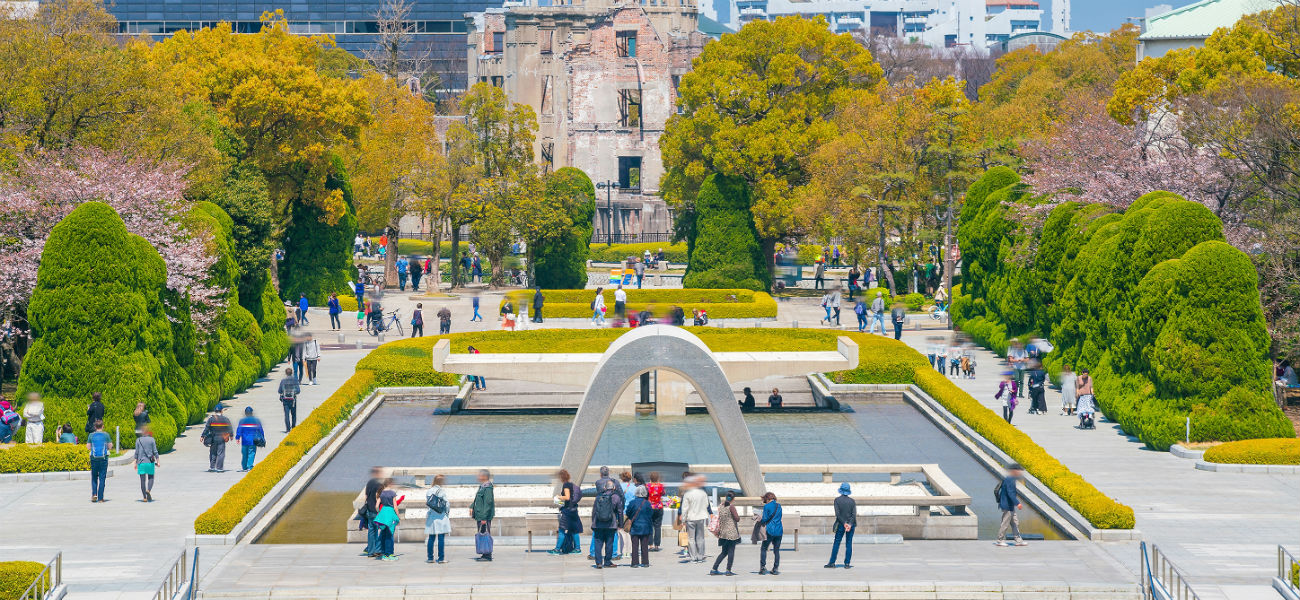
Breakfast at the hotel. Free time for personal programs or we recommend an optional full-day excursion to Hiroshima (for an extra charge). Departure by super-fast train (Bullet Train) from Kyoto station. The journey lasts approximately one and a half hours to Hiroshima station. Full-day city tour by bus with a guide: Atomic Bomb Dome, Peace Memorial Park and Museum. Lunch in a local restaurant (not included). After lunch, transfer by ferry (about 10 minutes) to Itsukushima Island (Miyajima). On Itsukushima is the most important Shinto shrine in that part of Japan, which is why the island is also called Miyajima, from the words miya (shrine) and jima (island). Some buildings and objects preserved here have been declared national treasures and specially protected by the Japanese government, and in 1996 the Shinto shrine on Itsukushima was included in the UNESCO World Heritage List. Itsukushima is a sacred place for Shintoists. The island has Mount Misen whose peak rises to 530 meters above sea level and has been revered since ancient times. Respect for the spirits of nature believed to dwell there was so great that access to the island was once allowed only to priests, while others could venerate it only from afar. It is dedicated to three sea goddesses, daughters of the god of wind and storms Susanoo-no-Mikoto. They were called Ichikishima, Tagori and Tagitsu, and according to legend lived in the inner sanctuary of the shrine. To allow people to get as close to the island as possible while preserving its purity and sanctity, the shrine was built right on the shore on wooden pillars rising from the sea, and during high tide it appears to float on the water. The shrine was reached by boat through the torii, traditional red-painted wooden gates located at the entrance to each Shinto shrine that mark the boundary between sacred and profane space. Passing through the torii symbolically purified the person entering the shrine. Return by ferry to the pier where the bus awaits for transfer to the train station and return by bullet train to Kyoto. Overnight.
10. KYOTO - OSAKA - ISTANBUL
After breakfast, check-out from the hotel and departure to Osaka. Upon arrival we start the city tour with a visit to Osaka Castle, a beautiful castle in green tones that has played an important role in Japanese history and was the site of many clashes between shoguns, feudal warlords who sometimes had authority greater than that of the emperor. The castle was originally built in 1583 by order of Toyotomi Hideyoshi, one of the most important military leaders and politicians in Japanese history. The castle served as the center of his power and symbolized the unity of Japan. After Toyotomi's defeat in the Siege of Osaka in 1615, the castle was destroyed, but it was rebuilt in the 17th century by the Tokugawa shogunate. Our tour will end with a visit to two famous districts in Osaka - Dotonbori and Shinsaibashi, which attract many visitors with their lively atmosphere, shops, restaurants and entertainment. Here we will have free time for lunch before heading to the airport. In the afternoon transfer by bus to Osaka – Kansai Airport. Check-in and departure for Istanbul at 21:50 on flight TK87 (Turkish Airlines). Overnight flight with meals served during the flight.
11. ISTANBUL – ZAGREB
Arrival in Istanbul is scheduled for 5:00, and the continuing flight to Zagreb is at 6:55 on flight TK1053 (Turkish Airlines). Arrival in Zagreb at 8:00.
The price includes
- air transportation in economy class on the route Zagreb – Tokyo – Osaka – Zagreb
- airline taxes
- includes 1 piece of checked luggage per person (each suitcase up to 23 kg) + 1 piece of hand luggage (up to 8 kg, dimensions 55x40x23 cm)
- 3 nights with breakfast in a 3*/4* hotel in Tokyo
- 1 night with breakfast and dinner in a 3*/4* hotel in the Mt. Fuji/Hakone area
- 4 nights with breakfast in a 3*/4* hotel in Kyoto
- excursions and sightseeing according to the program
- transportation by air-conditioned private bus
- local English-speaking guide
- entrance fees for: Nikko Toshogu Shinto shrine, Futarasan Shrine in Nikko, Mt. Fuji Ropeway (cable car), Lake Ashi cruise in Hakone, Sanjusangendo Temple in Kyoto, Kiyomizu Temple in Kyoto, Nijo Castle in Kyoto, Kinkakuji (Golden Pavilion) and Ryoanji in Kyoto, Todaiji Temple in Nara and Osaka Castle
- ride on the bullet train (Shinkansen) on the route Hakone - Kyoto
- Croatian-speaking tour leader
- preparation, organization and travel guarantee
The price does not include
- single room supplement 690 €
- additional services, meals, excursions and entrance fees not included in the travel program
- travel insurance (recommended)
Optional excursions
-
excursion to Hiroshima 345 € per person (minimum 15 registered passengers)
Includes Shinkansen bullet train travel on the route Kyoto – Hiroshima – Kyoto, boat trip to Miyajima island with entrance to Itsukushima Jinja shrine, entrance to Hiroshima Peace Park and Atomic Bomb Museum, Hiroshima Memorial Museum, local English-speaking guide, tour leader
Notes and useful information
IMPORTANT NOTES:
- Hotel classification in Japan corresponds to the official hotel classification in the country visited and may differ from European standards.
- Please check travel safety information for individual countries with the Ministry of Foreign and European Affairs or on their website: www.mvep.hr
- The tour operator has the right to change the travel program as well as flight departure times (when required by circumstances during the trip), but guarantees that the program will be carried out in full. The agency reserves the right to change the order of the itinerary depending on the opening hours of the sites visited.
- In case of changes in the prices of calculation elements by more than 1.5%, the tour operator has the right to change the price of the package.
- Passport must be valid for at least 6 months after entry into the country. A visa for Japan is not required (for Croatian citizens). Passengers who are not Croatian citizens must inform themselves about the visa regime of the country they are traveling to. When booking travel, a copy of the passport must be provided to the sales office. The traveler is solely responsible for travel documents (passport, airline ticket).
USEFUL INFORMATION - JAPAN
Official name: Parliamentary monarchy Japan
Geographical location: East Asia; consists of 4 islands – Hokkaido, Honshu, Kyushu and Shikoku
Area: 377,835 km2
Population: about 128,500,000
Capital: Tokyo, about 13,000,000 inhabitants
Language: Japanese
Religion: Shintoists and Buddhists 84%, others 16%
Time difference: +7 hours in summer / +8 hours in winter
Currency: Japanese yen (JPY), 1 EUR = approx. 174.37 JPY
Shopping: usual shop opening hours are from 10:00 to 19:00; Japan is one of the most expensive countries in the world (especially Tokyo and Osaka). The most popular products are: electronics, cameras, watches, many optical instruments, pearls, bamboo, kimonos, fans, etc.
Clothing and footwear: we recommend light cotton clothing for summer, and warmer clothing for the rest of the year depending on the season. We recommend comfortable footwear.
Food and drink: the staple is short-grain rice, and noodles are also popular. Typical dishes: sushi – raw fish placed on vinegar-seasoned rice, sashimi – raw fish sliced into thin pieces consumed with soy sauce flavored with wasabi, tempura – fried fish and vegetables served with tentsuyu sauce, yakitori – skewered chicken dipped in a sweet soy sauce, shabu shabu – Japanese meat fondue. Popular drinks: green tea, sake – heated rice spirit.
Electricity voltage: 100V, 50/60 Hz (adapter required)
Vaccinations: not required
Visa: not required, passport must be valid 6 months from the date of entry into the country. Please provide a copy of your passport when booking travel at the sales office.
Mobile networks: A1, T-Mobile and Telemach partners
Country calling code: +81
Useful website: www.jnto.go.jp
Climate: Japan has a temperate climate and four distinct seasons, but due to the large distance from north to south the climate varies by region. The far north is very cold in winter, while the far south has a subtropical climate. Seasonal winds blowing from the continent to the ocean in winter and in the opposite direction in summer also affect the climate. Late June and early July are the rainy season (except in Hokkaido), when a seasonal rain front (Baiu zensen) lies over Japan. In late summer and early autumn, typhoons develop in tropical low-pressure areas above the equator and move from the southwest to the northeast, often bringing heavy rains.
Embassy of the Republic of Croatia in Japan
Telephone: +81 3 5469 3014 Fax: +81 3 5469 3015
Address: 3-3-10 Hiroo
Shibuya-ku, Tokyo 150-0012, JAPAN
Email: tokyo@mvep.hr
- single room supplement 690 €
- tips for the guide and driver 50 € (payment on site to the tour leader)
- excursion to Hiroshima 345 € per person (minimum 15 registered passengers)
Includes Shinkansen bullet train travel on the route Kyoto – Hiroshima – Kyoto, boat trip to Miyajima island with entrance to Itsukushima Jinja shrine, entrance to Hiroshima Peace Park and Atomic Bomb Museum, Hiroshima Memorial Museum, local English-speaking guide, tour leader
Planned hotels:
Tokyo: THE GATE HOTEL Kaminarimon by HULIC 4* or similar
Hakone: YUMOTO FUJIYA HOTEL 4* or similar
Kyoto (departure: 17.3. - 27.3.2027): HOTEL KEIHAN KYOTO GRANDE 4* or similar
Kyoto (departure: 28.3. - 7.4.2027): HOTEL MONTEREY KYOTO 4* or similar
The price includes:
- air transportation in economy class on the route Zagreb – Tokyo – Osaka – Zagreb
- airline taxes
- includes 1 piece of checked luggage per person (each suitcase up to 23 kg) + 1 piece of hand luggage (up to 8 kg, dimensions 55x40x23 cm)
- 3 nights with breakfast in a 3*/4* hotel in Tokyo
- 1 night with breakfast and dinner in a 3*/4* hotel in the Mt. Fuji/Hakone area
- 4 nights with breakfast in a 3*/4* hotel in Kyoto
- excursions and sightseeing according to the program
- transportation by air-conditioned private bus
- local English-speaking guide
- entrance fees for: Nikko Toshogu Shinto shrine, Futarasan Shrine in Nikko, Mt. Fuji Ropeway (cable car), Lake Ashi cruise in Hakone, Sanjusangendo Temple in Kyoto, Kiyomizu Temple in Kyoto, Nijo Castle in Kyoto, Kinkakuji (Golden Pavilion) and Ryoanji in Kyoto, Todaiji Temple in Nara and Osaka Castle
- ride on the bullet train (Shinkansen) on the route Hakone - Kyoto
- Croatian-speaking tour leader
- preparation, organization and travel guarantee